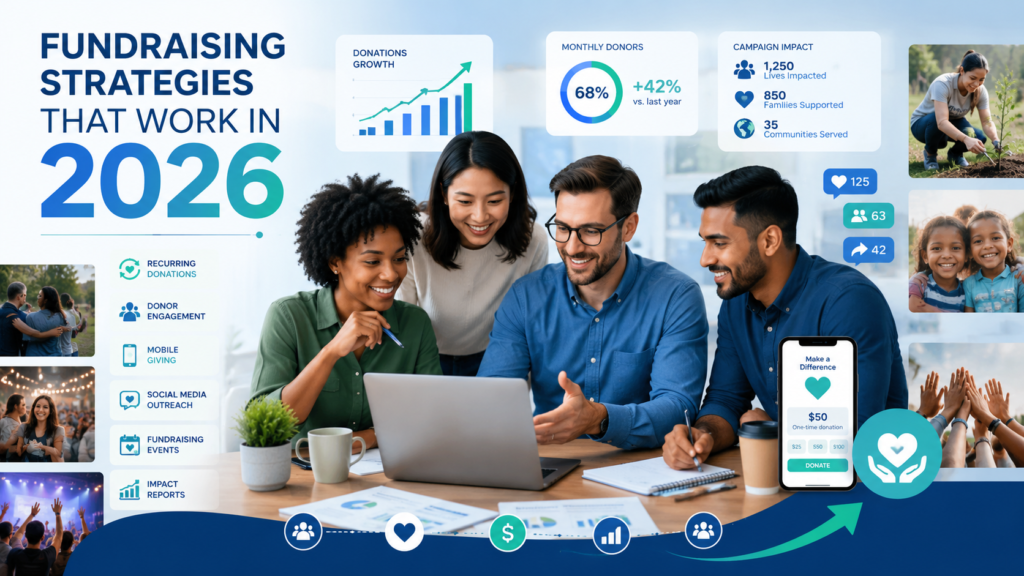
Fundraising strategies that work in 2026 are no longer limited to annual events, donation letters, and one-time appeals. Donors are more informed, digital channels are more competitive, and nonprofits need smarter ways to build trust, increase donations, and keep supporters engaged.
Today, successful fundraising depends on strong donor relationships, personalized communication, mobile-friendly giving, social media storytelling, recurring donations, and data-driven outreach. Whether you run a nonprofit, charity, school, community group, or social impact organization, the right fundraising approach can help you build sustainable support.
This guide explains fundraising strategies that work in 2026 and shows how organizations can increase donations, improve donor engagement, and create long-term fundraising success.
For many nonprofits, the challenge is not only asking for donations but also choosing the right fundraising strategies that work in 2026. The best approach combines digital giving, donor trust, recurring donations, social media engagement, and clear impact reporting.
Why Traditional Fundraising Alone Is No Longer Enough
Traditional fundraising methods like annual events, direct mail campaigns, and one-time donation appeals can still work. However, they are no longer enough on their own.
Modern donors expect more than a simple donation request. They want to understand the impact of their gift, receive personalized communication, and give through simple digital channels.
Today’s supporters often expect:
- Easy online giving options
- Mobile-friendly donation pages
- Personalized updates
- Clear impact reporting
- Transparent financial communication
- Ongoing engagement
- Meaningful connection with the cause
Organizations that adapt to these expectations are more likely to increase donations and improve donor loyalty.
Focus on Donor Experience
One of the most important fundraising strategies that work in 2026 is improving the donor experience.
Donors should not feel confused, ignored, or disconnected after giving. The donation process should be simple, fast, and meaningful.
How to Improve Donor Experience
To create a better donor experience:
- Simplify donation forms
- Offer multiple payment options
- Make pages mobile-friendly
- Send instant thank-you messages
- Personalize donor communication
- Share regular impact updates
- Make recurring giving easy
When giving feels simple and rewarding, donors are more likely to give again.
Use AI and Data Analytics for Smarter Fundraising
Artificial intelligence and data analytics are becoming useful tools for nonprofits and fundraising teams.
AI can help organizations understand donor behavior, identify giving patterns, improve campaign timing, and personalize outreach.
Benefits of AI-Powered Fundraising
AI can help with:
- Predicting potential major donors
- Segmenting donor lists
- Improving email targeting
- Automating donor follow-ups
- Analyzing campaign performance
- Identifying donors likely to give again
For example, a nonprofit can use donor data to identify supporters who usually donate during specific campaigns and send them a personalized message at the right time.
AI should not replace human relationships, but it can help fundraising teams communicate more effectively.
Build Strong Recurring Giving Programs
Recurring donations are one of the most reliable fundraising strategies that work in 2026.
Monthly donors provide predictable revenue, which helps organizations plan long-term programs and reduce uncertainty.
Tips for Growing Monthly Giving Programs
To grow recurring donations:
- Create a dedicated monthly giving program
- Explain the long-term impact of monthly gifts
- Make signup quick and simple
- Offer exclusive donor updates
- Share beneficiary stories regularly
- Thank recurring donors personally
Even small monthly donations can become powerful when many supporters participate consistently.
Leverage Peer-to-Peer Fundraising
Peer-to-peer fundraising allows supporters to raise money from their own networks. Instead of only asking people directly, your organization empowers existing supporters to become fundraisers.
This method works well because people are more likely to donate when asked by someone they know and trust.
Why Peer-to-Peer Campaigns Work
Peer-to-peer campaigns can help organizations achieve:
- Wider audience reach
- Stronger trust through personal recommendations
- Higher community involvement
- More social sharing
- Increased donor engagement
Popular examples include birthday fundraisers, charity walks, fitness challenges, memorial campaigns, and social media fundraising drives.
Create Engaging Virtual and Hybrid Fundraising Events
Virtual and hybrid fundraising events remain effective because they are flexible, accessible, and cost-efficient.
Hybrid events combine in-person participation with online access, allowing more people to join regardless of location.
Successful Event Ideas
Fundraising event ideas include:
- Virtual auctions
- Online charity concerts
- Webinars with guest speakers
- Digital fundraising challenges
- Hybrid galas
- Online workshops
- Community livestreams
These events can reduce location barriers and help organizations reach supporters outside their local area.
Use Social Media for Community-Driven Fundraising
Social media is now one of the most practical fundraising strategies that work in 2026 because it helps organizations reach donors where they already spend time. Short videos, campaign updates, and real impact stories can turn casual followers into active supporters.
Social media continues to play a major role in nonprofit fundraising. However, simply posting donation links is not enough.
Successful social media fundraising depends on storytelling, consistency, trust, and community participation.
Effective Social Media Fundraising Techniques
Use social media to:
- Share real beneficiary stories
- Post short-form videos
- Highlight campaign progress
- Thank donors publicly
- Encourage user-generated content
- Run time-sensitive donation drives
- Share behind-the-scenes updates
Short videos, emotional stories, and real impact updates often perform better than generic donation posts.
Strengthen Corporate Partnerships
Corporate partnerships can help nonprofits access funding, visibility, volunteers, and new donor networks.
Many businesses are investing in social impact, employee giving, and cause-based partnerships.
Ways to Collaborate with Businesses
Nonprofits can collaborate with companies through:
- Sponsorship programs
- Matching gift campaigns
- Employee giving programs
- Cause marketing campaigns
- Volunteer initiatives
- Event sponsorships
- Community impact partnerships
A strong corporate partnership should benefit both the nonprofit and the business while supporting a clear social cause.
Prioritize Transparency and Impact Reporting
Donors want evidence that their contributions are making a difference.
Organizations that regularly communicate results often build stronger trust and loyalty.
Information Donors Want to See
Donors usually want information such as:
- Project outcomes
- Financial accountability
- Success stories
- Beneficiary testimonials
- Program achievements
- Campaign progress
- Future goals
Impact reporting does not need to be complicated. Simple updates, charts, photos, stories, and short reports can help donors feel connected to your mission.
Make Fundraising Mobile-First
Most donors interact with online content through mobile devices. That means mobile-friendly fundraising is no longer optional.
If your donation page is slow, confusing, or difficult to use on a phone, you may lose potential donors.
Mobile Fundraising Best Practices
Use:
- Mobile-friendly donation pages
- Fast-loading websites
- Simple donation forms
- Digital wallet options
- One-click giving
- Mobile-responsive emails
- SMS fundraising campaigns
Reducing friction in the donation process can improve conversion rates and increase fundraising results.
Invest in Donor Retention, Not Just Acquisition
Many organizations focus heavily on finding new donors but forget to nurture existing supporters. This is a mistake.
Keeping donors is often more cost-effective than constantly trying to acquire new ones.
Donor Retention Strategies
To improve donor retention:
- Send personalized thank-you messages
- Share regular impact updates
- Create donor recognition programs
- Send anniversary acknowledgments
- Ask for feedback
- Segment donor communication
- Keep communication consistent
Strong donor relationships lead to higher lifetime value and more stable fundraising performance.
Build Storytelling-Based Campaigns
Storytelling is one of the most powerful ways to increase donor engagement.
People give because they connect emotionally with a mission, a person, a community, or a clear problem that needs solving.
How to Use Storytelling in Fundraising
Strong fundraising stories should include:
- A real problem
- A clear human impact
- A specific solution
- A simple donation ask
- A clear result donors can support
For example, instead of saying “donate to support education,” explain how a donation helps a specific student access books, classes, or digital learning tools.
Good storytelling makes the donor feel part of the solution.
The Future of Fundraising Beyond 2026
Fundraising will continue to become more personalized, digital, and data-driven. However, the core principle will remain the same: people support organizations they trust.
Future fundraising trends may include:
- Advanced AI donor insights
- More personalized donor journeys
- Immersive virtual fundraising experiences
- Greater transparency tools
- Social commerce fundraising
- Stronger mobile giving experiences
Organizations that combine technology with authentic human connection will be better positioned for long-term success.
FAQs
What are the best fundraising strategies that work in 2026?
The best strategies include recurring giving, peer-to-peer fundraising, AI-powered donor engagement, social media storytelling, corporate partnerships, mobile-first donation pages, and transparent impact reporting.
Why is donor retention important in fundraising?
Donor retention helps organizations maintain stable revenue, reduce acquisition costs, and build stronger long-term relationships with supporters.
How can nonprofits use AI for fundraising?
Nonprofits can use AI to analyze donor behavior, segment supporters, personalize outreach, automate follow-ups, and improve campaign performance.
Are virtual fundraising events still effective in 2026?
Yes. Virtual and hybrid fundraising events remain effective because they reduce location barriers, lower event costs, and make participation easier.
How does mobile fundraising increase donations?
Mobile fundraising improves donations by making it easier for supporters to give through fast pages, simple forms, digital wallets, and mobile-friendly emails.
Overall, fundraising strategies that work in 2026 are built around trust, convenience, and long-term donor relationships. Organizations that combine technology with human connection will have a stronger chance of increasing donations and improving donor retention.
Conclusion
Fundraising strategies that work in 2026 focus on relationships, personalization, transparency, mobile-first giving, and technology-driven engagement.
Nonprofits that improve donor experience, build recurring giving programs, use peer-to-peer campaigns, strengthen corporate partnerships, and communicate impact clearly are more likely to increase donations and build long-term support.
Start with one or two strategies, measure results, and improve over time. A strong fundraising program is not built overnight, but consistent donor-focused action can create sustainable growth and greater impact.